
What is Cystoid Edema (CME)?;
Cystoid edema is the accumulation of fluid within the layers of the macula, forming small cysts. It occurs as a result of inflammation after trauma, retinal disease or, in some cases, as a post-operative complication (e.g. after cataract surgery).
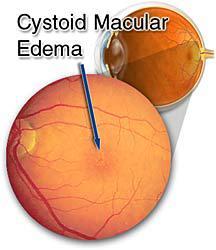
Symptoms & Clinical Picture
Edema causes visual dysfunction characterized by:
Thumb: Blurred central vision.
Metamorphopsia: The straight lines appear wavy.
Photophobia: Strong sensitivity to light.
Colour alteration: The vision may take on a light pink tint.
Precision Diagnosis
Due to its nature, swelling is difficult to detect by simple dowsing. In our practice we use:
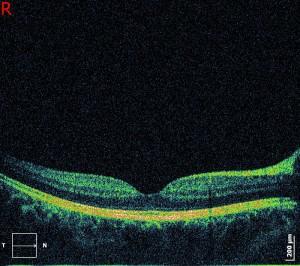
OCT (Optical Coherence Tomography): The most modern, non-invasive method that visualizes the cysts with absolute accuracy.
Fluorescein angiography: To identify the source of the liquid leakage.
Therapeutic Treatment
Recovery is often gradual (from 2 to 15 months). Our treatment strategy includes:
Medication: Anti-inflammatory drops or pills.
Intra-obstetric injections: Use of cortisone (Triamcinolone) or anti-angiogenic agents (Lucentis, Avastin etc.) that offer rapid reduction of edema and improvement of vision.
How will the doctor help?;
Our goal is to remove the fluid from the macula.
We usually start with special drops.
If the swelling persists, the intravaginal injections (small, painless injections inside the eye) offer spectacular results, significantly accelerating recovery.
Frequently Asked Questions
Why does my vision look pink?;
This is a very typical symptom of cystoid edema. The fluid that collects in the macula changes the way light strikes the visual cells, often giving that particular pink tint to the image you see.
How long will it take for me to see well?;
Recovery from cystoid edema is a “marathon”, not a sprint. It can take anywhere from 2 to 15 months for full recovery. With modern endovascular injections, this time is often significantly reduced.
Can it occur after cataract surgery?;
Yes, it is a well-known postoperative reaction (Irvine-Gass syndrome). It occurs in a small percentage of patients a few weeks after surgery. It is effectively treated with anti-inflammatory eye drops and rarely affects the final visual outcome.
Does the cortisone injection in the eye hurt?;
No. The procedure is done under local anaesthesia and takes a few seconds. Cortisone (Triamcinolone) acts directly on the source of the inflammation, often providing dramatic improvement where drops are not enough.
How does OCT help in diagnosis?;
OCT is the “right hand” of the ophthalmologist. Because the swelling is often invisible on simple examination, OCT takes a “CT” section of the macula and shows us the cysts with fluid. This way, we can measure the swelling and know exactly if our treatment is working.
Is there a risk of it reappearing?;
Depending on the cause (e.g. if it is due to inflammatory disease of the uvula), the swelling may recur. Regular monitoring is essential to prevent any recurrence of fluid.