
What is Corneal Ulcer?;
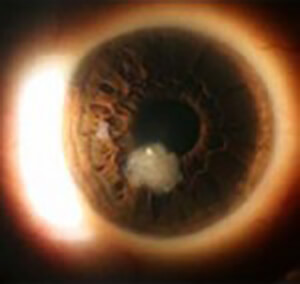
The ulcer is created when the surface of the cornea is damaged. It is divided into two main categories:
Infectious Ulcer: Caused by bacteria (such as the aggressive Pseudomonas), viruses (e.g. Herpes) or fungi. It requires immediate intervention as it can cause irreversible damage in 24-48 hours.
Atonal (Sterile) Elkos: It is a non-infectious inflammatory reaction (infiltration), which usually occurs at the periphery of the cornea and causes less pain.
Risk Factors & Contact Lenses
Soft contact lens wearers are at greatest risk, especially when hygiene rules are not followed. Lenses can absorb and trap germs on the surface of the eye. Other causes include severe dry eyes, injuries (scraping) and systemic diseases.
When should you call the ophthalmologist immediately?;
If you present:
Severe pain in the eye and redness.
Severe tearing and discharge (chimples).
High sensitivity to light.
A visible white dot on the transparent part of the eye.
The Treatment
For the infectious ulcers, treatment is aggressive with antibiotic eye drops every 15 minutes, and hospitalisation may be necessary.
For the sterile ulcers, we use anti-inflammatories and cortisone drops to calm the eye.
Attention to Contact Lights!
If you wear contact lenses and your eye gets red or sore, remove them immediately. Misuse of lenses is the number one cause of aggressive bacterial infections such as pseudomonas, which can destroy the eye in less than two days.
Frequently Asked Questions
Why is an infectious ulcer so dangerous?;
Some bacteria produce enzymes that literally “melt” the corneal tissue. If the ulcer goes deep, it can cause a hole (puncture) in the eye, leading to permanent loss of vision.
Can I use a cortisone eye drops if I suspect an ulcer?;
NO. If the ulcer is caused by a microbe or herpes, cortisone can dramatically worsen the condition and accelerate the destruction of the cornea. The use of cortisone is only allowed after an ophthalmologist's express order.
Does it hurt to get a culture from the ulcer?;
No. The doctor uses anaesthetic drops that completely numb the surface of the eye. Taking the sample takes only a few seconds and is necessary to find the right antibiotic.
How can I prevent ulcers if I wear contact lenses?;
Never sleep with the lenses on.
Do not use tap water to clean them.
Change your lens case regularly.
If your eye becomes irritated, stop use and consult a doctor.
Will there be a scar in my eye after the treatment?;
If the ulcer was deep or in the centre of the cornea, a permanent white scar (nebula) may be left, which may reduce the final vision. Early treatment minimises this risk.
What is the «infiltration» the doctor mentioned?;
Infiltration is the accumulation of white blood cells in the area as a reaction of the body. It can be the first stage of an ulcer or an innocent reaction to an allergy or contact lens irritation.