Dowsing under Mydriasis: Myths and Truths about the Safety of the Examination
Dethoscopy (the examination of the inside of the eye) is the most important tool for the early diagnosis of conditions such as Diabetic Retinopathy. To do it properly, it often requires dilating the pupil (mydriasis) with special drops.
Many patients, but also physicians of other specialties, hesitate to proceed with dilation for fear of causing acute closed-angle glaucoma. However, modern scientific evidence shows that this fear is unfounded.
Why is expansion necessary?;
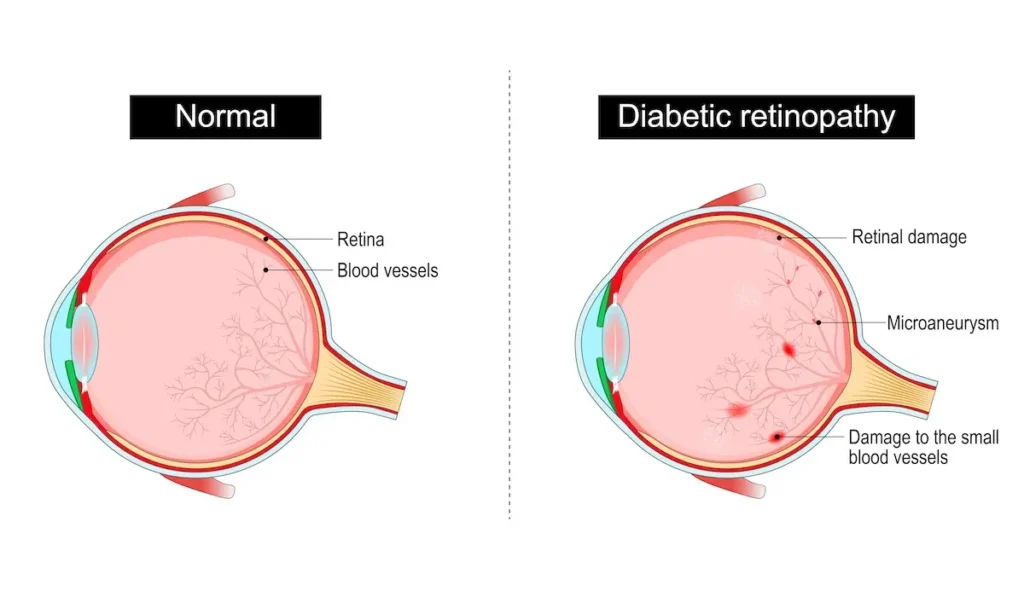
The sensitivity of the test increases dramatically when the pupil is dilated. In particular, the probability of detecting lesions (e.g. from diabetes) is twice as long compared to the test without drops. Failure to perform dilation can lead to an incomplete diagnosis.
What do the numbers say about risk?;
The risk of glaucoma from the drops is extremely low to zero. Large population studies in thousands of patients (Rotterdam, Baltimore, Blue Mountains Eye Study) have shown that:
In a sample of 6,750 people over 55 years of age, the complication rate was just 0,03% (2 persons).
In other studies with thousands of participants, it was not found no case of acute glaucoma.
Even in high-risk populations (such as people with a history of glaucoma), dilation has been shown to be safe.
The Paradox of the "Dark Room"
It is scientifically proven that the pupil is more at risk of “closing” the corner of the eye when it is semi-dilated (e.g. when sitting in a dark room or cinema) than when it is fully dilated by the medicated eye drops. Therefore, drops are safer than semi-dilated drops.
Frequently Asked Questions
Why do you have to give me drops to open my pupil? Can't you see without them?;
Without the drops, we see through a very small hole (your daughter). With the drops, the pupil opens up and allows us to see the whole inside of the eye (retina) clearly. Research shows that the chance of finding damage, such as diabetic retinopathy, is twice as likely when the pupil is dilated.
Is there a risk of glaucoma from the drops?;
The risk is practically zero. In studies with tens of thousands of patients, the incidence has been minimal (rate of 0.03% or less). You are far more likely to have a problem from an undiagnosed condition because you didn't do good dowsing than you are to get something from the drops.
I've heard of "Closed Angle Glaucoma". Am I in danger?;
Acute closed-angle glaucoma occurs mainly when the pupil is “semi-dilated” (half-open), which happens normally when you are in a dark room. Surprisingly, it is more dangerous to sit in the dark than to do the test with the drops that cause full dilation. Even in predisposed individuals, the test was shown to be safe.
What are the symptoms I should look out for after the test?;
Although extremely rare, we always inform you for security reasons. If after you leave the office you suddenly feel a sudden sensation:
Intense pain in the eye
Blurred vision that does not go away
Nausea or tendency to vomit Then you should contact us immediately. We repeat, however, that the chances of this happening are 1 in 20,000.
How long will the blur of drops last?;
The effect of tropicamide usually lasts 4-6 hours. During this time you will find it difficult to focus closely (e.g. on reading or on your mobile phone) and you will be sensitive to bright light.
Can I drive after the test?;
No. Due to blurred vision and sensitivity to light, driving is prohibited until the effects of the drug wear off. We suggest that you come with an escort or use taxis/transportation.