
Leber's Optic Neuropathy (LHON): a Rare Inherited Challenge
Η Leber's Optic Neuropathy (LHON) is a rare optic nerve disease caused by genetic mutations in the mitochondria (the “energy factories” of cells). These mutations reduce the production of energy needed for the optic nerve to function, gradually leading to its dysfunction and atrophy.
Epidemiology and Event
Although the prevalence of the disease is estimated at 2,23 per 100.000 persons, it is believed that there is significant under-diagnosis, as its symptoms are often confused with other optic neuropathies.
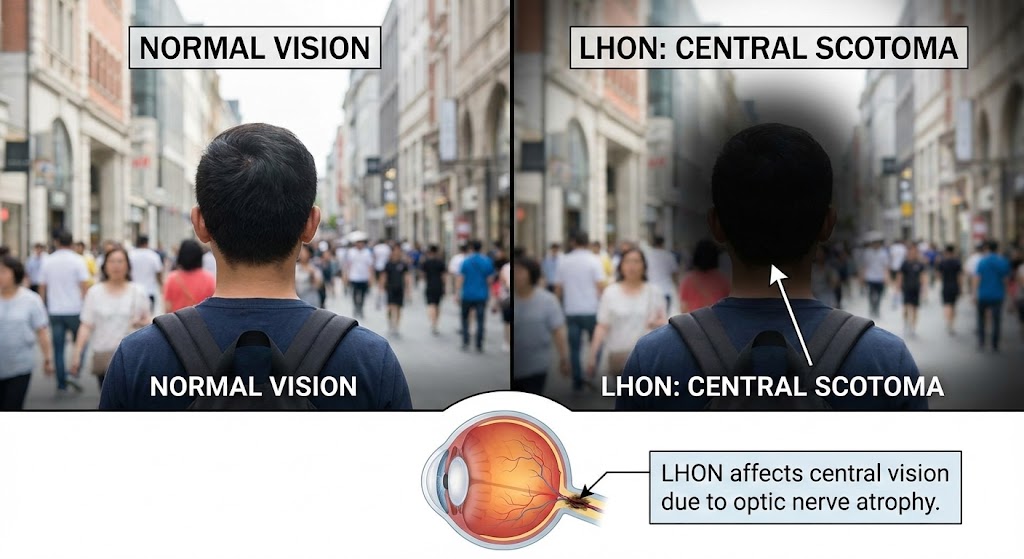
Main Features
Sudden and painless loss of central vision.
Age of onset: Usually between 15 and 30 years of age (mostly in men), although it can affect women and people of any age.
Sequential attack: It affects both eyes, either simultaneously or in succession (weeks or months apart).
Heredity: It is carried exclusively by the mother (mitochondrial inheritance).
The Impact on Quality of Life
LHON dramatically affects everyday life, as the patient loses the ability to read, drive, perceive colours or recognise faces. Around the 80% of patients are driven to “legal blindness” within the first year of the onset of symptoms.
Diagnosis and Risk Factors
The diagnosis of LHON is a complex process that requires the exclusion of other diseases (such as multiple sclerosis). It is based on the following tests:
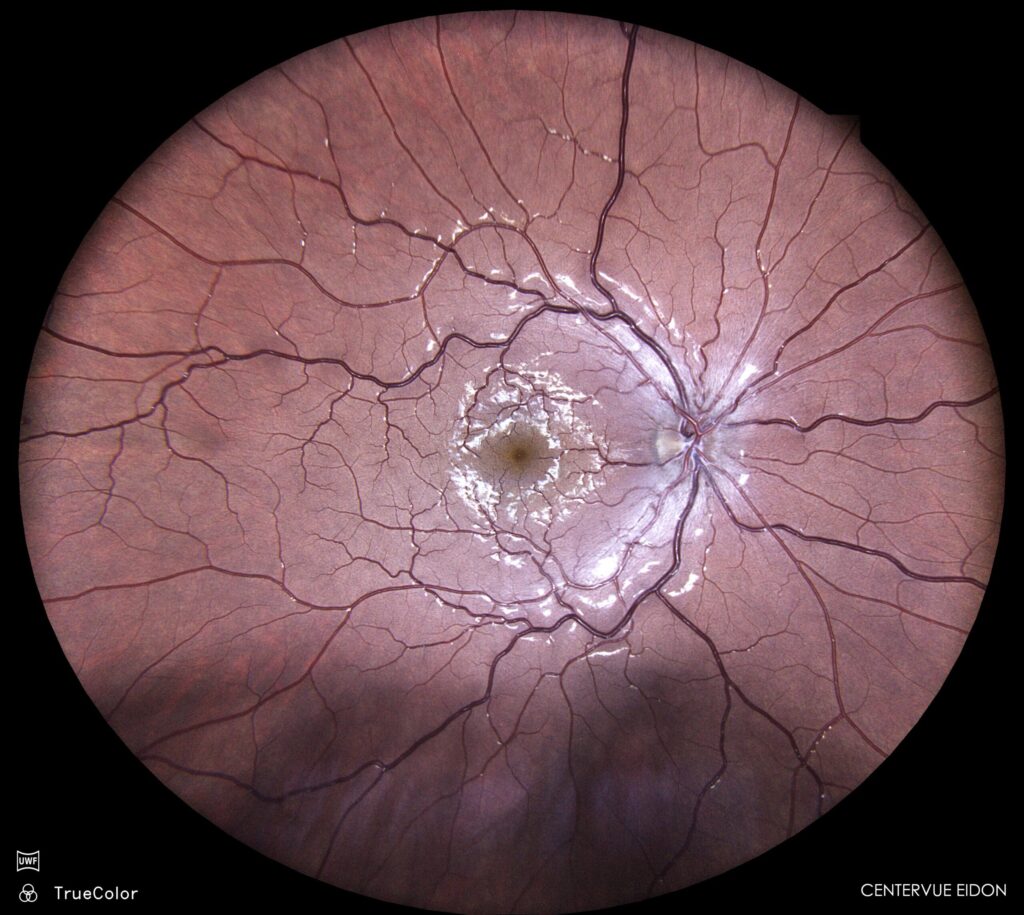
Ophthalmoscopy: Check the optical disc.
Optical coherence tomography (OCT): Detailed imaging of nerve fibres.
Colour test: Check for red-green discoloration.
Fluorescein angiography.
Important Note: The carriers of the mutations and the patients should avoid strictly avoid smoking and drinking alcohol, as they are high risk factors for activating or worsening the disease.
Therapeutic Treatment
Until recently, treatment options were limited. Now, there is a new treatment approved by the European Medicines Agency (EMA), which is also available in Greece.
Advantages of the new treatment:
It helps to restoration of part of the vision in several cases.
It contributes to stabilization vision and prevent further deterioration.
The duration of treatment is usually one year.
Full compensation: The cost is fully covered by EOPYY (after approval by the competent committee).
Frequently Asked Questions
Why does the disease prefer men since it is inherited from the mother?;
Although all offspring of a carrier mother inherit the mutation, men are much more likely to have symptoms (about 50% compared to 10% for women). The exact causes of this difference remain under investigation.
Is it possible for the vision to improve on its own?;
Yes, in a small percentage of patients there is an automatic partial improvement of vision, depending on the type of the specific genetic mutation. However, initiating treatment remains the safest route.
If I am a carrier but have no symptoms, am I at risk?;
Yes, there is always the possibility of developing the disease, especially during adolescence or early adolescence. Avoiding smoking and alcohol is the most important way of prevention for carriers.
How soon should treatment start?;
Early intervention is critical. The sooner treatment is started after the onset of symptoms, the better the chances of stabilizing or recovering some of the vision.
How do I know if my blurred vision is LHON or something else?;
Because LHON is painless and sudden, patients often think they just need glasses. If the blurred vision persists and affects the center of your visual field, a specialized eye exam is warranted.
How fast does the disease progress?;
The speed varies from person to person. Usually vision gradually decreases during adolescence and stabilizes at a later level. Regular monitoring helps in the early inclusion of the patient in new clinical studies.