
Waterfall: What you need to know about its modern treatment
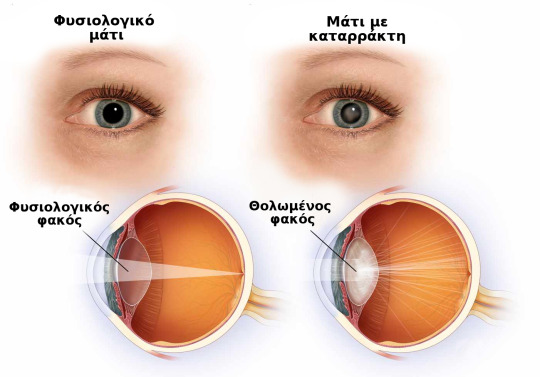
Ο waterfall is the normal clouding of the crystalline lens of the eye, which usually occurs with age. This lens is located behind the pupil and is responsible for focusing light on the retina. When it loses its transparency, vision gradually becomes blurred, making daily activities increasingly difficult.
Symptoms and Indications
The symptoms of cataracts develop slowly and include:
Gradual blurring of vision: Objects look less clean, like looking through a dirty window.
Alteration of colour vision: The colours may look duller or yellowish.
Annoying reflections (Glare): Light sources (such as car headlights at night) become a nuisance.
Diplomacy: If the central core of the lens becomes cloudy, double vision may be seen in the affected eye.
Surgical Treatment: The Technique of Phacoemulsification
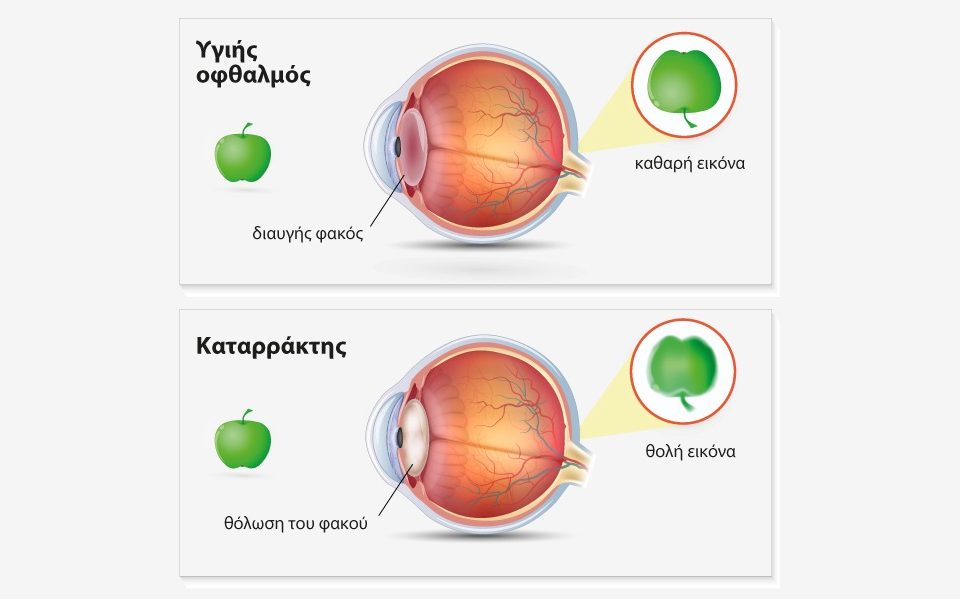
The treatment of cataracts is exclusively surgical. The purpose of the operation is to remove the cloudy lens and replace it with an artificial intraocular lens.
The Intervention Procedure
Tissue Protection: The eye is filled with a special viscoelastic substance that protects sensitive tissues, especially the cornea.
Burning: The surgeon removes the front part of the periocular sac (the bag that surrounds the lens).
Phacotrypsy: Using ultrasound, the opaque lens is crushed and removed by suction, leaving the posterior part of the periorbital lens intact.
Endophakic implantation: An intraocular lens, the power of which has been accurately calculated by examination of the biometrics. The lens is stabilized inside the eye with special “feet”.
After the Intervention: Recovery instructions
When you leave the clinic, you will start using special colloids according to your doctor's prescription. Your vision will improve gradually, with optimal performance usually achieved after the final fitting of your glasses.
Tips for the first 15 days
To ensure proper healing, attention is required to the following:
Avoiding rubbing: Nothing should touch or press your eye. A blow can open the incision.
Protection: Wear protective goggles and avoid sports. Beware of contact with young children.
Hygiene: Avoid getting shampoo or soap in the eye and do not use swimming pools.
Prevention of infections: Avoid dusty areas and contact with people who have a cold.
Attention: If you notice sudden vision loss, severe pain or persistent redness, contact your eye surgeon immediately.
Secondary Waterfall
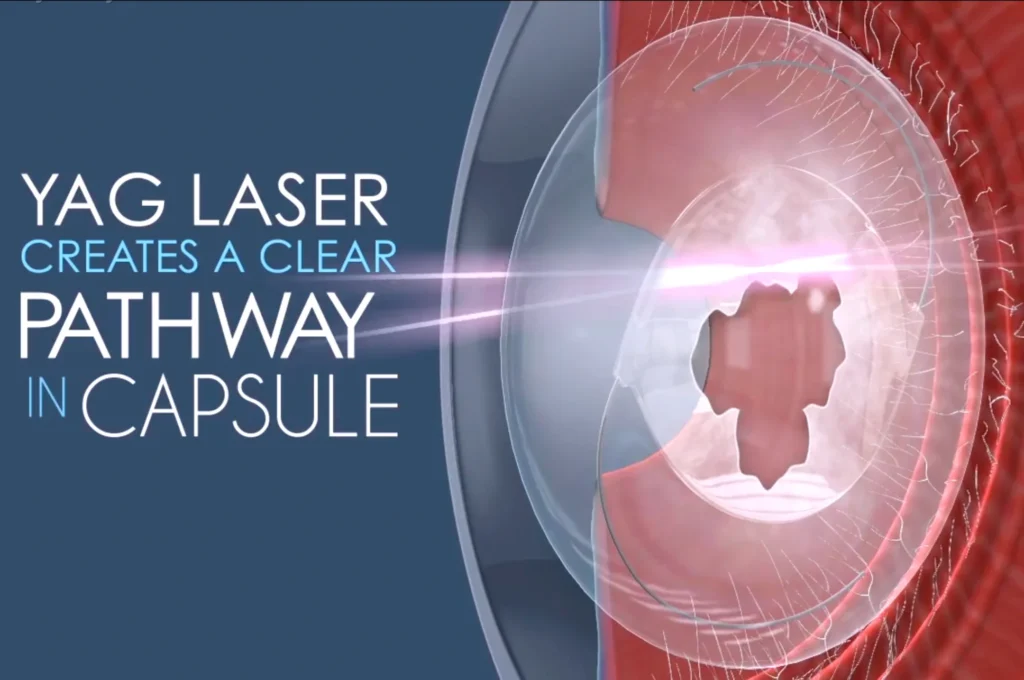
In about 20-25% of patients, the posterior part of the periphysis (the sac that holds the intraocular lens) may become cloudy months or years after surgery. This is called secondary cataract and its symptoms are similar to those of the initial cataract (blurring, decreased vision).
Treatment with YAG Laser
The treatment is simple, painless and can be done in the doctor's office without an incision:
Used the YAG laser, a type of “cold” laser.
A small opening is created in the cloudy envelope for light to pass through.
The improvement in vision is almost immediate after the procedure.
Frequently Asked Questions
Does cataract surgery hurt?;
No, the procedure is usually done under local anaesthesia (drops) and is completely painless. The patient may only feel a slight pressure.
Will I need to be hospitalized at the clinic?;
No, cataract surgery is a “day-care” procedure. You can return home a few hours after the surgery.
When will I be able to drive or watch TV?;
You can read and watch TV from the next day. Driving is usually allowed after a few days, depending on the speed of vision recovery and your doctor's instructions.
What is biometrics?;
It is the test done before surgery to measure the dimensions of your eye. Based on this data, the exact power of the intraocular lens that will be implanted to correct your myopia or hyperopia is calculated.
Can the waterfall "come back out"?;
The cataract does not reappear as the natural lens has been removed. However, the membrane supporting it can become cloudy (secondary cataract), which can be permanently corrected with the YAG Laser.
How safe is the procedure?;
Cataract surgery is considered one of the safest and most successful medical procedures worldwide. Adherence to post-operative instructions minimizes any risk of complications.