
The Anatomy of the Tear
The prekeratotic tear layer consists of three interdependent layers:
Mucous (Internal): It ensures the stable adhesion of tears to the cornea.
Humid (Medium): It is produced by the lacrimal gland and provides oxygen and nutrients.
Lipid (External): It is produced by the meibomian glands and prevents the evaporation of the aqueous phase.
Etiology & Risk Factors
Dry eyes result from either reduced tear production or increased evaporation. The main factors are ageing (60% fat reduction at 65 years), hormonal changes (menopause), systemic diseases (Sjogren's, Parkinson's) and environmental conditions (screens, air conditioning).
Diagnosis & Treatment
Diagnosis involves measuring the quality and quantity of tears with special dyes.
Tear substitutes: Preference for preservative-free formulations (Preservative-free).
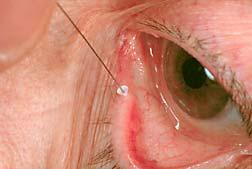
Blockage of the lacrimal points: Placement of silicone or collagen plugs to preserve the natural tears on the ocular surface.

Practical Relief Tips
Take breaks: When using a computer, remember to blink often.
Hydration: Drink 8-10 glasses of water a day.
Artificial Tears: Use drops without preservatives. Avoid eye drops that only “whiten” the eye, as they can aggravate dryness.
Frequently Asked Questions
Why do my eyes water when I have dry eyes?;
This is called “reflex tearing”. When the eye becomes dry and irritated, it sends a distress signal to the brain, which commands massive tear production. However, these tears are mostly water and do not contain the necessary lipids to stay in the eye, so they just roll down the cheeks without hydrating.
How do plugs help with tears?;
Think of the eye as a washbasin. Tears escape through two small holes in the corner of the eye towards the nose. By placing tiny plugs in these holes, we “clog” the drainage, forcing your own natural tears to stay longer on the surface of the eye.
Are contact lenses to blame for dryness?;
Yes, contact lenses act like a “sponge” that absorbs moisture from the tear layer. If you have dry eyes, you may need to change your lens type or use lubricating drops regularly.
Is dry eye a permanent condition?;
In many cases, such as in ageing or autoimmune diseases, it is a chronic condition that requires constant management. However, if caused by environmental factors or medication, it can be significantly improved with the right changes.
Why does my vision become blurred when I read?;
When we focus on a screen or a book, we unconsciously reduce the frequency with which we blink. This causes the tear layer to “break down” and the surface of the eye becomes uneven, causing temporary blurring.
What are "preservative-free artificial tears"?;
The preservatives in the drops may irritate the eye if they are used several times a day. Preservative-free products (usually in disposable ampoules) are kinder to the eye surface and can be used as often as needed.