Presbyopia: The Physiological Loss of Conformity and Methods of Correction
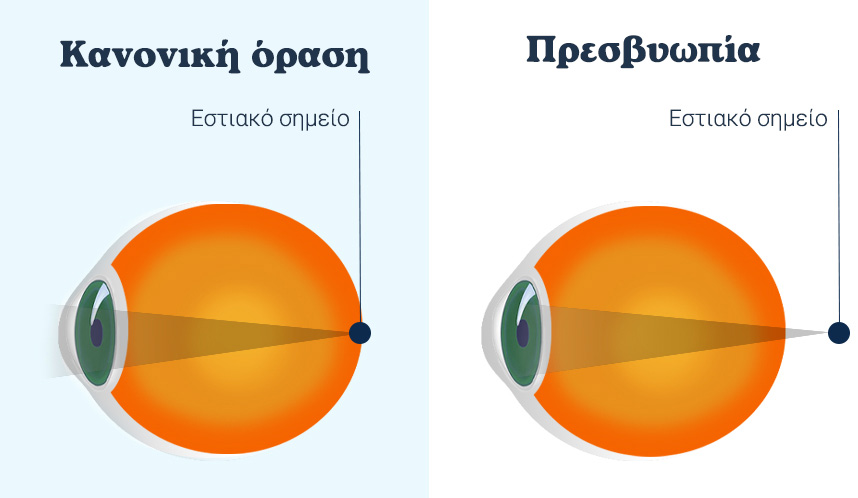
It is the progressive loss of the ability of the natural lens of the eye to focus at close distances. The lens, in order to focus close, has to increase its curvature (process of adaptation). After the age of 40, the lens hardens and loses its elasticity, making close focusing impossible without assistance.
Diagnosis & Symptomatology
The diagnosis is carried out with full refractive testing. Symptoms include the need to move away from the text (working distance), loss of contrast of the letters and eye fatigue in low light conditions.
What are the signs?;
Difficulty reading small letters (medication instructions, receipts).
Need for more light to focus.
Fatigue and headache after long hours of computer work or reading.
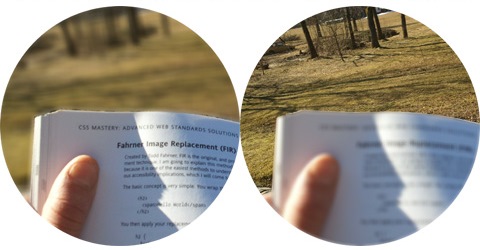
The letters “dance” or blur on the paper.
Therapeutic Options
Rehabilitation is individualized based on the patient's needs:
Visual Correction: Use of single close-up, bifocal or multifocal lenses.
Monovision: A technique where the dominant eye is corrected for long and the other for short. It is applied with contact lenses or refractive surgery (Laser).
Multifocal Endoscopes: Surgical replacement of the natural lens (usually during cataract surgery) for permanent correction at all distances.
Frequently Asked Questions
Why does presbyopia suddenly appear after the age of 40?;
It does not occur suddenly, but the loss of lens elasticity reaches a “tipping point” at that age when the eye can no longer meet the need for close focus. The process continues until the age of 60-65 years.
If I start wearing glasses, will my eye get lazy and my grades go up?;
No. Presbyopia will increase anyway due to age, whether you wear glasses or not. Glasses simply allow you to read at your leisure without straining your eyes.
What is Monovision and how does it work?;
It is a technique where we “train” the brain to use one eye for distance (e.g. driving) and the other for near (reading). It is a great solution for many patients who want to avoid glasses, but it requires a short adjustment period.
Are there multifocal contact lenses?;
Yes! Like glasses, there are special contact lenses that allow you to see far and near at the same time. They are a very popular choice for people with active lives and hobbies.
Why do myopes see better up close without glasses?;
Because the myopic eye is already “set” to focus close. When a nearsighted person takes off their glasses, they use their eye's natural focus for near, compensating for their presbyopia for a few extra years.
Can Laser correct presbyopia?;
Yes, there are laser techniques (such as Presbyond or Monovision LASIK) that modify the curvature of the cornea to improve depth of field and near vision. Your eye doctor will determine if you are a suitable candidate