Refraction Control: The Basis for Crystal Vision
Refraction is the fundamental ophthalmological examination that accurately determines the refractive error of the eye (myopia, hyperopia, astigmatism, presbyopia). Our goal is to achieve maximum visual acuity, ensuring you get the clearest possible vision.
How do we find the right grades?;
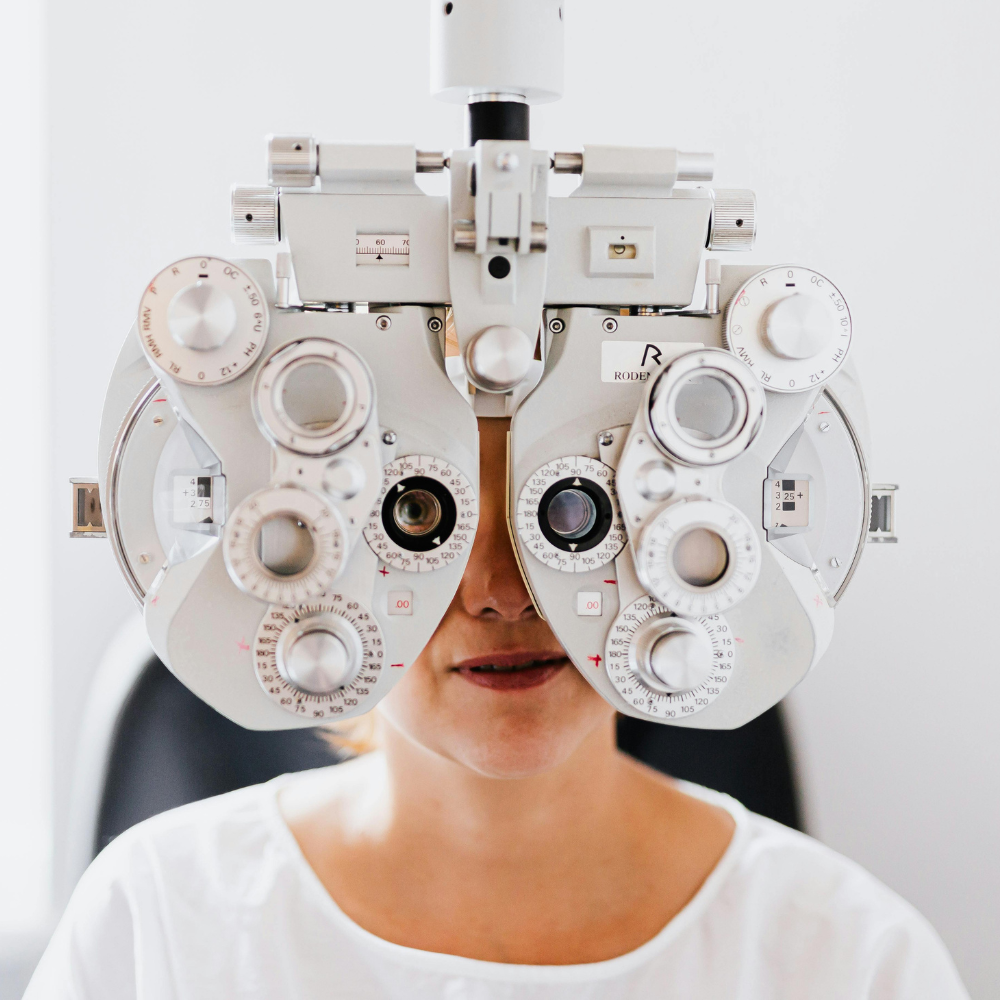
The test is simple and interactive. We use either the modern laptop (a mask-like device containing all the lenses) or the traditional test frame (the special glasses you wear).
The doctor will ask you to look at the chart across the table and will change lenses by asking you: “Do you see better with 1 or 2?”. There is no right or wrong answer - our guide is your own sense of comfort and purity. Our goal is for you to leave the office seeing the world with maximum clarity.
The Process
To determine the grades, we combine clinical experience with cutting-edge technology:
Objective Refraction: Initially, a measurement is made with electronic equipment (refractometer) for a first assessment.
Subjective Refraction: Then we use the Foropter (the special device placed in front of your eyes) or the classic Test Skeleton.
As you observe the optotype (table with letters/symbols), we alternate special corrective lenses in front of your eye. Through our collaboration and your responses, we come up with the ideal prescription that provides restful and sharp vision.
Frequently Asked Questions
What is the «Foropter»?;
It's that big machine with the many lenses that we bring in front of your face. It allows us to change grades quickly and accurately, without having to take lenses off and on by hand (as is done on the test frame). It makes the exam faster and more relaxing for you.
If I answer «better 1 or 2» wrong, do I get the wrong glasses?;
Don't worry at all! This question is asked many times and in different ways to confirm the result. The ophthalmologist doesn't just rely on one answer, but cross-checks the evidence to make sure the prescription is the right one.
Why do you sometimes put drops on me before measuring?;
In children or young adults, the muscles of the eye are very strong and can «hide» degrees (especially hyperopia). Drops (cycloplegia) temporarily relax these muscles, allowing us to measure the true refraction of the eye with absolute accuracy.
When should I have this test?;
We recommend a refraction test once a year, as your vision may gradually change without you noticing. You should also come in if you have headaches, dizziness or difficulty driving at night.
What is the difference between the «Test Skeleton» and the machine?;
The forklift is faster, but the test frame (the «heavy» glasses you wear) is just as useful. Sometimes, we prefer it to let you walk around the room a bit and make sure you're getting dizzy with your new grades.
Is the measurement the same for glasses and contact lenses?;
Not exactly. Because the contact lens rests on the eye, while the glasses have a distance, the degrees may vary slightly (especially in large myopes). That's why you should let the doctor know if you want a prescription for contact lenses as well.