
Dyschromatopsia & Color blindness: Disorders of Color Perception
Our ability to perceive colours is based on special cells in the retina called Cognac. Cones contain three light-sensitive pigments: red, green and blue. When one or more of these pigments are missing or underactive, colour blindness occurs.
Forms of the Disease
Hereditary (Most common): It is linked to the X chromosome and affects mainly men (8% compared to 0.4% in women). It is passed from mother to son and remains stable throughout life.
It's a handicap: It is caused by diseases of the optic nerve or retina. It may affect only one eye and may worsen if the underlying disease is not treated.
Classification
Dyschromatopsia: Partial lack of perception of certain colours (usually red-green). Most sufferers belong to the category of “abnormal trichromatics”.
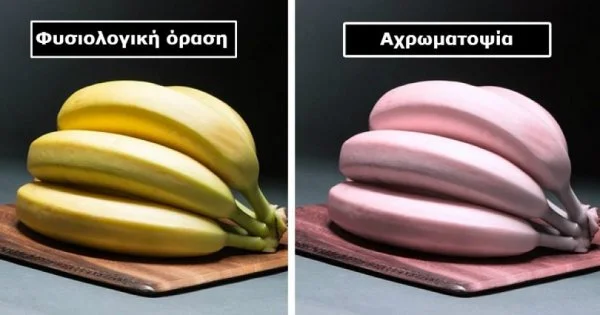
Complete Colorblindness (Monochromatopsia): Extremely rare condition where the patient sees only shades of grey. It is often accompanied by low vision and nystagmus (involuntary eye movements).
What are the symptoms?;
Confusion between colours (e.g. dark green looks like brown).
Difficulty separating blue from yellow (more rare).
In very severe cases, photosensitivity or reduced vision.
Diagnosis
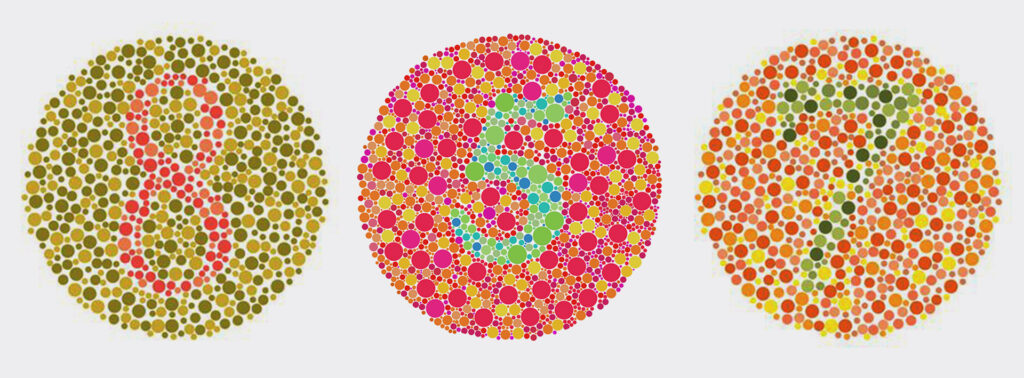
Diagnosis is carried out quickly in the doctor's office with the use of special colour charts Ishihara.
The patient is asked to identify numbers formed by colour spots, allowing the ophthalmologist to determine the type and severity of the dyschromatopsia.
Is there a cure?;
Currently there is no medical treatment that “fixes” the cells. However, people with dyschromatopsia are highly adaptable:
They learn to associate colours with their position (e.g. the red light is always on top).
They use the brightness and shape of objects to identify colour.
Frequently Asked Questions
Why do men more often have colour blindness?;
Because the gene is on the X chromosome. Men only have one X (XY), so if they inherit it, they will develop the condition. Women have two X's (XX), so the “healthy” chromosome usually covers the problematic one.
Can a child not know that he or she has colour blindness?;
Very often! Children learn to name colours from memory (e.g. they know that grass is “green” even if they see it as yellow). Diagnosis is usually made in preschool with the Ishihara test.
Is it hereditaryAre there special glasses that "cure" colour blindness?Is it hereditary? Will my children have it?;
There are special lenses on the market that help to increase the contrast between certain colours, making it easier to distinguish between them. They do not “cure” the condition, nor do they allow the patient to see colour like a normal trichromatic, but they can improve everyday life in some tasks.
Can I become a pilot or an electrician if I have dyschromatopsia?;
Some professions require perfect colour perception for safety reasons (e.g. pilots, sailors, military, electricians because of wires). In these cases, a diagnosis of dyschromatopsia can be a barrier to the practice of the profession.
What is the difference between dyschromatopsia and complete colour blindness?;
Dyschromatopsia is the difficulty in distinguishing specifically colours (e.g. red-green). Complete colour blindness is the complete inability to perceive any colour and is extremely rare (1 in 30,000).
Does colour blindness get worse over the years?;
If it's hereditary, it stays exactly the same throughout your life. But if it is acquired (e.g. due to cataracts, glaucoma or optic nerve disease), it can change depending on the course of the underlying disease.